

Warehouse and logistics jobs are the fastest practical route into steady, full-time work that pays a living wage without a degree. The sector hires year-round, trains on the job, and rewards reliability over credentials. Anyone who shows up on time, hits their numbers, and stays a few months can move from entry-level pay into roles that clear $30 an hour. This guide breaks down what the jobs pay, what they demand from the body, which certifications raise the wage fastest, and the exact path from picking boxes to running a shift.
What “warehouse and logistics” actually covers
The sector is not one job. It is four connected stages, and the pay and physical load change at each one.
- Warehouse storage — receiving, stocking, and inventory inside large buildings. Steady pace, predictable hours.
- Distribution — moving freight in bulk between facilities, often by pallet and forklift. More machine work, higher pay.
- Fulfillment — picking and packing individual customer orders. This is where most entry-level hiring happens, and where companies like Amazon scale up fastest. See current Amazon warehouse jobs for the volume here.
- Last-mile delivery — getting packages from the local hub to the doorstep. Driving roles, route work, and the clearest jump in pay once a commercial license is involved.
A worker can build an entire career without leaving the sector, sliding from a fulfillment floor into a distribution center or into a driver seat. That mobility is the real reason these jobs are worth taking seriously. Browse warehouse jobs near you to see which of these four stages is actually hiring in your area, because availability varies hard by region.
The positions and how they rank
The ladder is short and well-defined. Unlike office careers, where titles blur, warehouse roles map directly to responsibility and pay. The standard progression looks like this:
- Picker / Packer — the entry point. Pull items from shelves, pack orders, scan, move on. No experience required.
- Team Lead — still on the floor, but responsible for a small group’s output and quality. First step into leadership, usually a small raise plus standing.
- Supervisor — owns a shift or a zone. Manages people, schedules, and metrics. This is where pay jumps into salaried territory at many employers.
- Operations Manager — runs the building’s flow, headcount, and budget. The top of the on-site ladder for most workers who started as pickers.
The honest take: the hardest leap is the first one, from picker to team lead. It is not about doing the job better than everyone. It is about being the person who is there every shift, who flags problems early, and who other workers already follow. Supervisors get promoted from the people who already act like leads before they have the title.
What the work pays
Base pay for entry-level warehouse work in 2026 runs roughly $19 to $22 an hour at the major employers. That is the starting number. It does not stay there for anyone who keeps the job, and it is not the full picture, because overtime and night-shift differentials push real take-home well above base.
Here is how pay tracks by position and time on the job. Numbers are general ranges for full-time work at large facilities; smaller regional warehouses pay less, and high-cost metros pay more.




| Position | Base hourly | With overtime | Experience to reach it |
|---|---|---|---|
| Picker / Packer (new) | $19–22 | $25–29 | Day one |
| Picker / Packer (1+ yr) | $21–24 | $28–31 | 6–12 months |
| Forklift Operator | $23–26 | $30–33 | Certification + months in |
| Team Lead | $24–28 | $32–36 | 1–2 years |
| Supervisor | $28–34 | Often salaried | 2–4 years |
| Operations Manager | $38–55+ | Salaried | 4–7 years |
Read the table this way: the gap between a new picker and a forklift operator is roughly four to five dollars an hour, and the only thing standing in between is a certification that takes days to earn. That is the single best return on time in the entire sector. More on that below.
Certifications that raise the wage
Most of warehouse work needs no paperwork to start. But three certifications change the math on pay, and they are worth pursuing in a specific order.
Forklift license (+$2–5/hr)
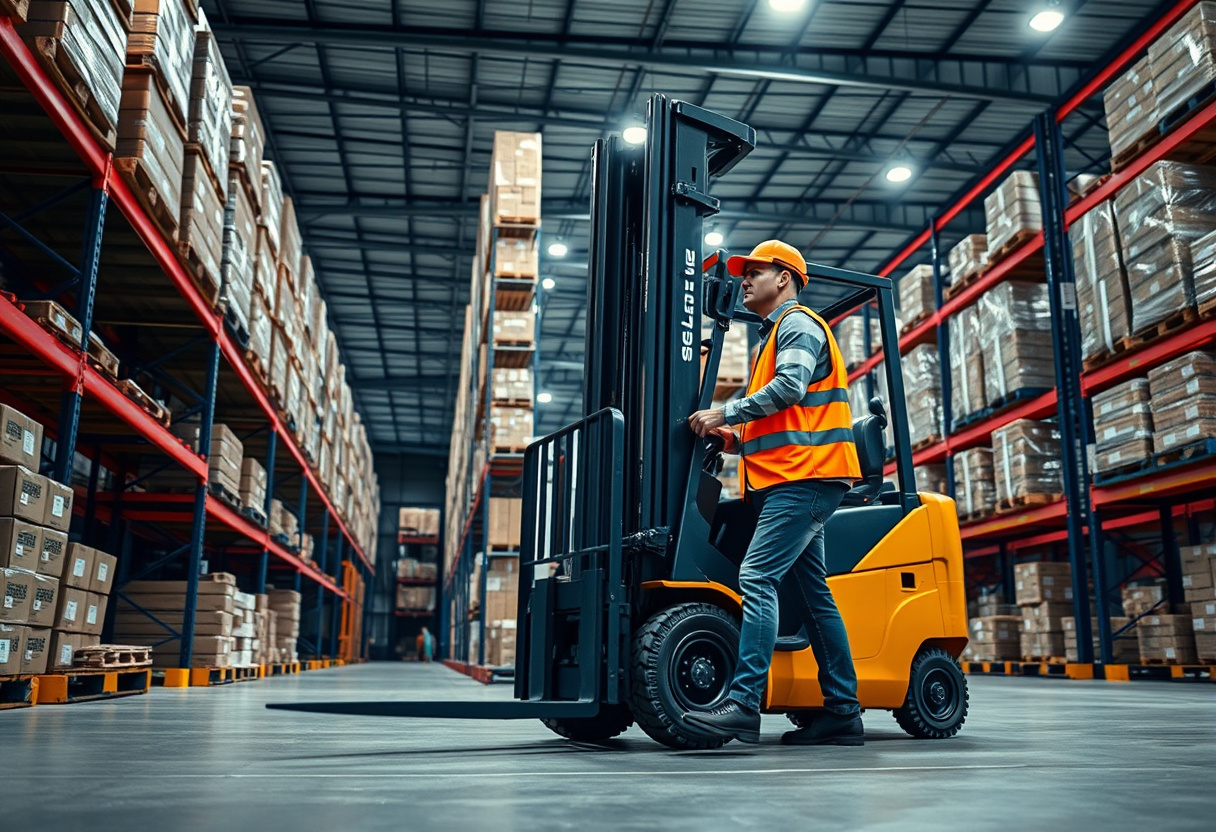
This is the first move anyone should make. A forklift certification is short, often free if the employer provides it, and immediately separates a worker from the picker pay band. Operators are always in demand, the work is less brutal on the body than hand-picking, and the pay bump is reliable. Many large facilities will train and certify workers on the clock, so the cost is mostly time and willingness.
OSHA certification
OSHA safety training (the 10-hour and 30-hour cards) signals that a worker understands warehouse safety law and can be trusted with responsibility. It rarely raises base pay on its own, but it is close to required for moving into lead and supervisor roles, where someone has to own safety for a team. Getting the 30-hour card before a promotion conversation removes one of the company’s reasons to say no.
CDL (Commercial Driver’s License)
A CDL is the biggest single jump available, because it moves a worker out of the building and into driving, where pay scales differently. It takes real time and money to earn, and many logistics employers will sponsor or reimburse the training in exchange for a work commitment. For anyone eyeing UPS driver jobs or last-mile and freight roles, the CDL is the gate. It is the longest investment on this list and the one with the highest ceiling.
| Certification | Time to earn | Typical cost | Pay impact |
|---|---|---|---|
| Forklift license | 1–3 days | Free–$200 (often employer-paid) | +$2–5/hr immediately |
| OSHA 10/30 | 10–30 hours | $60–190 | Unlocks lead/supervisor track |
| CDL | 4–8 weeks | $3,000–7,000 (often sponsored) | Driver pay, much higher ceiling |
The clear recommendation: get the forklift card first, the OSHA card before chasing a promotion, and the CDL only if the goal is driving. Stacking all three over two to three years is how a $19-an-hour picker becomes a $33-an-hour operator or a well-paid driver without ever sitting in a classroom for a degree.
The biggest employers and what they’re like
Six companies dominate hiring, and they are not interchangeable. The culture, pace, and promotion speed differ enough to matter when choosing where to apply.
- Amazon — the highest volume of openings and the fastest onboarding. Hires almost constantly, pays competitively, and promotes quickly for those who hit metrics. The pace is demanding and the productivity tracking is real. Best for getting in fast.
- UPS — strong union presence, excellent benefits, and a clear path to driver roles that pay very well. Part-time package handling is a common entry point that converts to full-time over time. Patience pays here.
- FedEx — a large network across ground, freight, and express, with varied roles and solid advancement. Worth comparing the divisions before applying, since pay and schedules differ. Look at current FedEx careers to see which division is hiring locally.
- XPO — freight and supply-chain focused, heavier on distribution and driving roles, often good for workers chasing a CDL track.
- DHL — strong in international logistics and contract warehousing; steady work inside large fulfillment operations.
- Walmart distribution centers — among the better-paying entry-level warehouse jobs, with structured raises and stable, long-tenure workforces. Slots open less often but are worth waiting for.
The practical strategy is to apply to two or three at once. Amazon to get hired quickly, UPS or Walmart for the long-term benefits and pay stability, and a freight company like XPO if the end goal is driving. Taking the first offer to start earning, then switching once a better-fitting role opens, is a completely normal move in this sector and carries no stigma.
How overtime actually works
Overtime is where warehouse pay stops being modest and starts being good. Hours past 40 in a week are paid at time-and-a-half, so an hour that normally pays $20 pays $30. At peak, overtime is not occasional. It is the default, and it can add hundreds of dollars to a weekly check.
The timing is predictable. The most overtime is available in the fourth quarter, from October through December, when retail volume spikes for the holidays. A picker on base $20 who works fifteen overtime hours a week during peak is earning over $1,100 in a week before taxes. That is the math that makes these jobs worth the physical cost.
- Q4 (Oct–Dec) — heaviest overtime of the year. Mandatory OT is common at large fulfillment centers.
- Mid-summer — secondary bump at some employers tied to back-to-school and mid-year sales events.
- Night and weekend shifts — often carry a pay differential on top of base, stacking with overtime for the highest hourly take-home in the building.
The trade-off is real: peak-season overtime is exhausting and the schedule controls the worker, not the other way around. Anyone counting on that income should plan for the body to feel it. But for paying down debt or building a cushion fast, three months of heavy Q4 overtime does more than half a year of regular shifts.
Physical requirements — be honest about this
These are physical jobs. Pretending otherwise sets people up to quit in the first week. The standard demands at most facilities:
- Lifting — repeatedly handling packages up to 50 pounds is the common standard, sometimes more in freight roles.
- Standing and walking — full shifts on the feet, often covering several miles a day on a pick floor. Sitting is not part of the job.
- Pace — output is measured. Pickers have targets per hour, and falling consistently short gets noticed quickly, especially at metric-heavy employers.
- Repetition — the same motions for hours. The wear is on joints, lower back, and feet over time, not on any single lift.
The smart play is to protect the body from day one. Good shoes are not optional. Proper lifting form matters more over a career than raw strength. And moving into a forklift role early takes much of the repetitive strain off, which is another reason the forklift certification is the best early investment for anyone planning to stay in the sector for years.
Peak season: the easiest way in
For anyone with no experience and no certifications, the single best entry point is seasonal hiring in the fourth quarter. From roughly September through December, every major employer hires aggressively, lowers its bar, and onboards in days. Background and resume matter less because the buildings simply need bodies to move holiday volume.
The real value is not the seasonal paycheck. It is conversion. A large share of permanent warehouse staff started as seasonal hires who were kept on after peak. The companies use the season as an extended tryout, and the workers who get retained almost always do the same handful of things.
- Show up every scheduled shift, on time. Attendance during peak is the number one filter. Many seasonal hires wash out on attendance alone, which means simply being reliable puts a worker near the top.
- Hit the productivity numbers. Not the fastest in the building — just consistently at or above target.
- Take the overtime. Workers who say yes to extra hours during peak signal they want the job, and that gets remembered when permanent slots are decided.
- Ask directly about converting. Tell a supervisor, before the season ends, that the goal is a permanent role. Stated intent matters; managers keep the people who ask.
Done right, a seasonal job that starts in October becomes a permanent role with benefits by January, and a forklift certification by spring. That is a realistic twelve-month path from zero to a stable career, and it starts with a single seasonal application.
How to apply
Applying is fast and almost entirely online or by phone. No cover letter, no polished resume required for entry-level roles.
- Apply directly on the employer’s hiring site, or browse aggregated warehouse jobs near you to compare what is open locally before committing.
- Apply to two or three employers at once. Offers come fast, and having options means taking the best schedule and pay rather than the first call.
- Pick a shift honestly. Night shifts pay more but cost more in sleep and life. Choose the one that can actually be sustained for months.
- Complete the onboarding steps quickly — background check, basic screening, orientation. Slots fill, and the fast applicant gets the start date.
The recommendation, by who you are
The right move depends on the situation. Here is the direct call for each common reader.
No experience, need income now. Apply to Amazon warehouse jobs or any large fulfillment center hiring seasonally, especially in Q4. Get in, prove reliable attendance, and convert to permanent. This is the fastest route from nothing to a steady paycheck.
Already working warehouse, want more money. Get the forklift certification immediately — it is the best four-dollar-an-hour raise available for a few days of effort. Then get OSHA and angle for team lead. Two years of this clears $30 an hour with overtime.
Want the highest pay and don’t mind driving. Aim at a CDL track. Start in a freight-heavy employer like XPO or pursue UPS driver jobs, and let the employer sponsor the license where possible. Driving carries the highest ceiling in the sector.
Want stability and benefits above all. Target UPS, a Walmart distribution center, or compare FedEx careers across divisions. These reward tenure with strong benefits and structured raises. Slower to start, better to stay.
The bottom line holds for everyone: warehouse and logistics work is one of the few fields in 2026 where a person with no degree can start at $19 an hour and, within two to three years of showing up and stacking a couple of certifications, be earning over $30. The barrier is not talent or education. It is reliability and a willingness to take the next step on the ladder. Take the seasonal job, get the forklift card, and the rest follows.